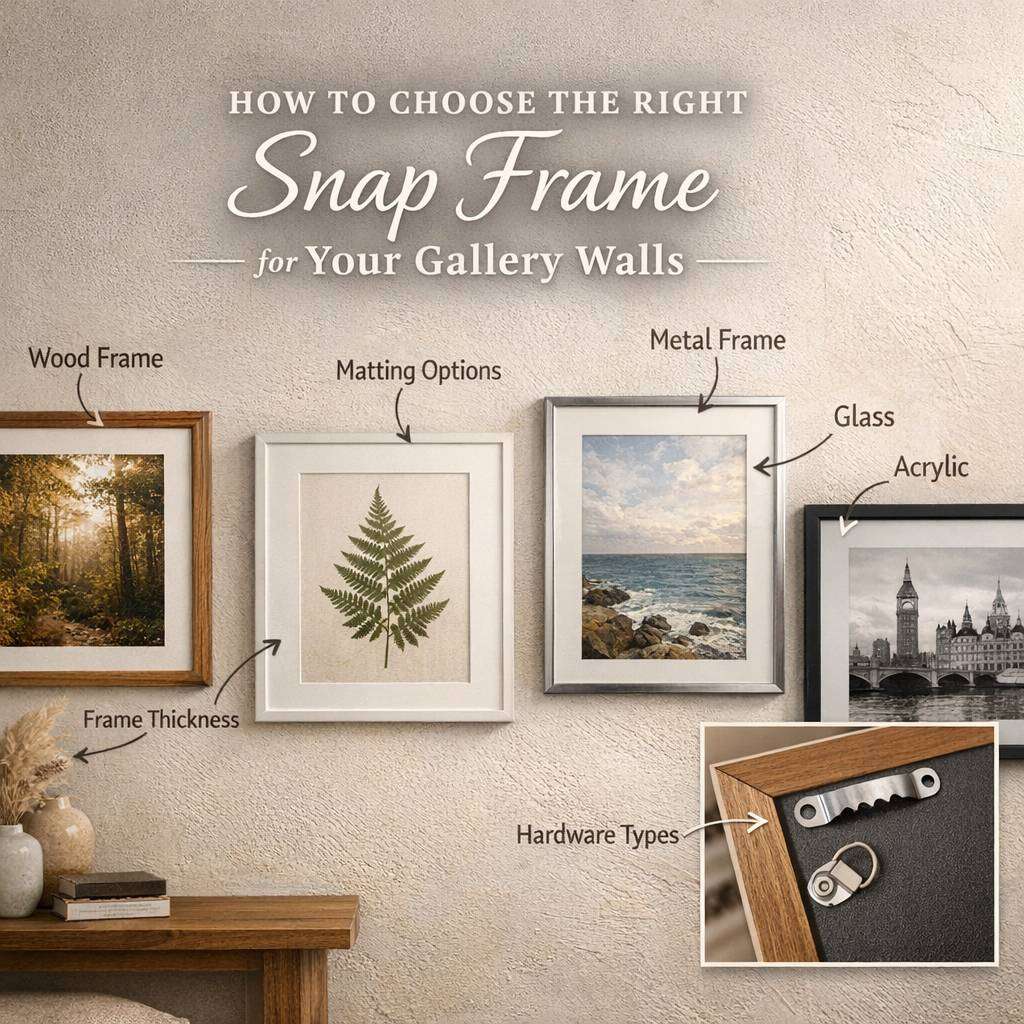
Choosing the right snap frame for your gallery walls can dramatically influence the presentation of your artwork and the overall mood of the space. A well-chosen snap frame not only protects your prints but also enhances colours, textures, and the viewer’s focus. In this guide, you’ll find practical tips and expert insights to help you pick snap frames that suit your style, budget, and curation goals.
Whether you’re designing a domestic gallery in a hallway or a polished display in a dedicated room, the choices can be overwhelming. The good news is that snap frames offer a flexible, budget-friendly, and user-friendly solution for frequent changes. With the right approach, you can refresh your collection effortlessly, keeping each piece looking its best and aligned with your aesthetic.
snap frames
Snap frames are a popular choice for rapid, tool-free poster and print changes. The defining feature is a slim aluminium or plastic extrusion that securely snaps shut around the contents. This mechanism keeps your artwork flat, evenly pressed, and protected from dust and handling. When selecting snap frames, consider:
- Frame profile: Slim profiles look contemporary and unobtrusive, while thicker profiles can be used to create a bold, gallery-like statement.
- Material and finish: Aluminium is common for its durability and modern feel; wood effects can add warmth or a traditional vibe.
- Glazing: Aimed primarily at protection, crystal-clear acrylic sheets are lightweight and shatter-resistant, though glass can offer scratch resistance in low-risk areas.
- Mounting options: Look for frames with easy wall mounting and secure hanging hardware. Some snap frames are designed for vertical or horizontal orientation, giving you flexibility across spaces.
For a cohesive wall, try matching frame finishes to other hardware in the room—lip handles, light fixtures, or shelving—to create a harmonious gallery. If your space hosts a rotating selection of works, snap frames are especially advantageous because they allow for quick swaps without the need for tools.
snap frame
When you’re choosing a snap frame, the emphasis should be on practicality married with aesthetic resonance. Consider the following steps to ensure your selection complements both your art and the room:
1) Measure accurately: Before purchasing, measure the artwork and the display area. Include room for a minimal mat or spacer if you like a floating effect. Remember that some snap frames are designed for standard poster sizes, while others accommodate custom dimensions.
2) Decide on flush versus contrast: Some wall setups benefit from prints that sit flush against the wall with frames no deeper than necessary. Others benefit from adding depth through a moulding or shadow box effect. Snap frames can achieve both looks depending on the chosen profile and mounting method.
3) Think about lighting: Positioning your frames to catch natural light can highlight colours and textures. Avoid glare from overhead lights or window reflections, especially if you’re using glass or acrylic glazing. In bright spaces, choose anti-glare acrylic or non-reflective finishes to maintain legibility of the artwork.
4) Plan for curation: If you curate frequently, select snap frames that allow easy re-framing without tools. Magnetic or clip-on closures can speed up the process and reduce the risk of damaging the print during changes.
5) Consider the environment: Humidity, temperature, and direct sunlight can affect prints. Look for freeze-thaw resistant coatings or UV-filtering glazing if your gallery walls are subject to variable conditions. A dry, stable environment helps preserve the artwork longer.
6) Accessibility and safety: For households with children or pets, choose robust snap frames with secure closures and shatter-resistant glazing. Lightweight frames are easier to handle but ensure they’re not easily toppled.
7) Budget versus longevity: Snap frames come in a range of prices. The cheap end can be perfectly adequate for short-term displays, while mid- to high-end frames offer longer life, better finishes, and additional features such as anti-reflective coatings. Invest in quality where it matters most—frame stability, glazing clarity, and hardware reliability.
practical installation tips
- Use a level: A straight display makes even the most striking art feel deliberate. Double-check alignment with a spirit level before fixing screws.
- Create a grid or salon-style wall: Snap frames lend themselves to modular arrangements. Start with a central anchor piece and work outward, ensuring consistent spacing between frames.
- Group by theme or colour: To avoid visual clutter, organise frames by shared characteristics rather than random assortment.
- Use correct wall anchors: For plaster, masonry, or brick, select appropriate fixings to prevent sagging over time.
- Protect your artworks: If you’re changing works frequently, consider a thin spacer or mat to protect the print from the backing board and glare from the glazing.
A snap frame offers quick, effortless photo display with a clean, professional look. It’s ideal for galleries, events, and home decor, providing secure, reusable mounting. For stylish options, explore a snap frame here: snap frame, today.
maintenance and care
- Clean frames regularly with a soft, dry cloth. Avoid abrasive cleaners that could scratch the frame or glazing.
- Inspect the snap mechanism periodically. Ensure the frame still closes securely and that the artwork lies flat.
- Replace glazing when it becomes scratched or discoloured. Modern anti-reflective options can improve viewing comfort.
- Rotate exhibits thoughtfully: Even with snap frames, give your most valuable pieces some space and consider light exposure to preserve colours over the long term.
If you’re embarking on a gallery-wall project, start by selecting a few staple snap frames that align with your room’s lighting and architectural details. From there, you can expand into a curated mix of sizes and finishes, keeping a cohesive feel while allowing your collection to evolve. With the right snap frames, your gallery walls will be both compelling and adaptable, inviting viewers to linger and revisit your curated moments.
